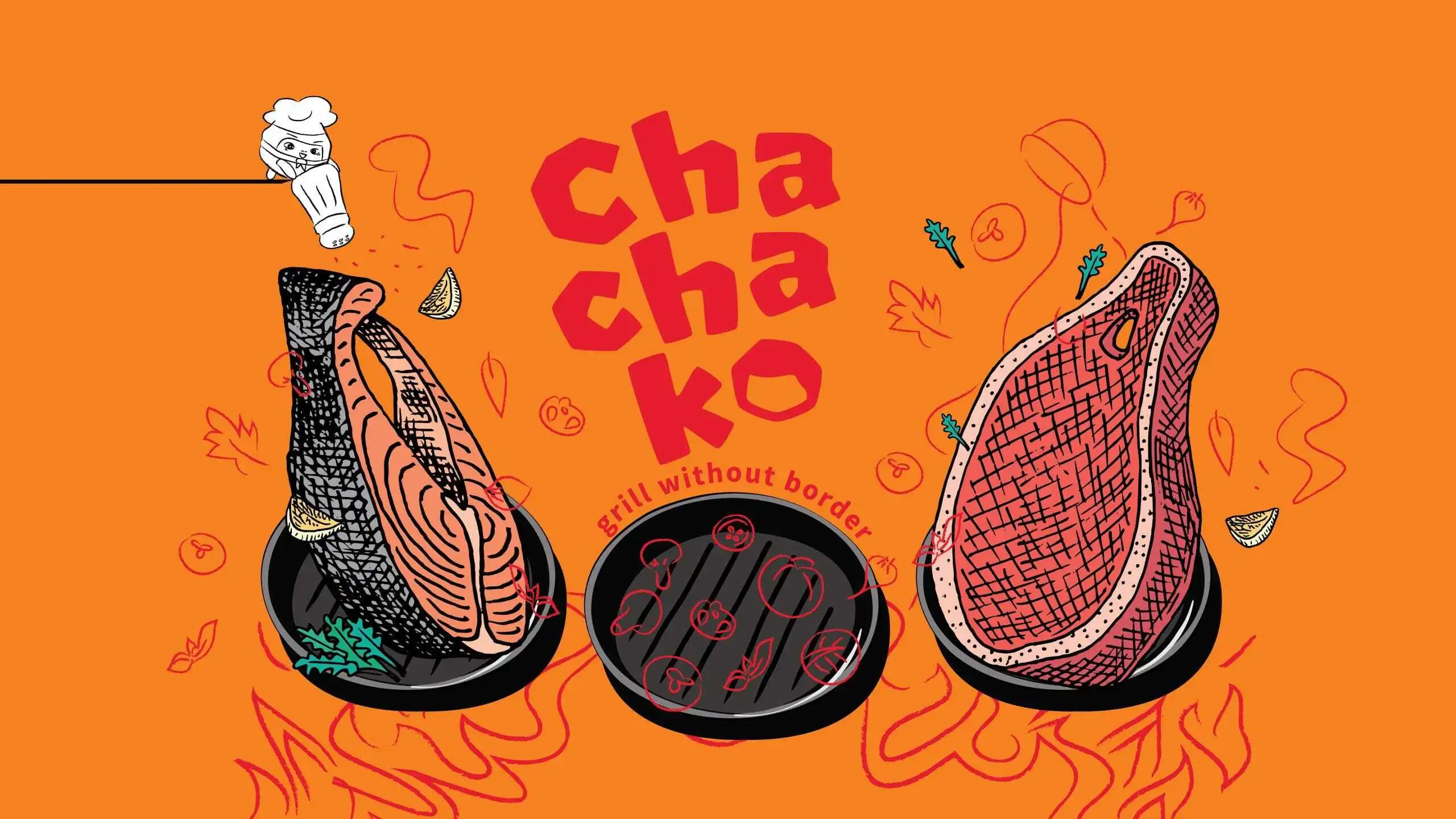
Introduction: The Reality of Running an F&B Business in Singapore
If you are running a restaurant, café, or food brand in Singapore today, you are operating in one of the most challenging environments in the region.
Margins are tightening. Costs are rising across every part of the business. Competition is intense, and customers are more price-sensitive than ever.
Many F&B owners respond by cutting costs. They reduce portion sizes, switch to cheaper ingredients, or trim manpower. These actions may provide short-term relief, but they rarely solve the underlying problem.
The real issue is not just cost. It is positioning.
The businesses that survive and grow in this environment are not necessarily the cheapest. They are the ones that customers are willing to pay more for, especially in Singapore’s diverse and multicultural branding landscape.
This is where brand strategy becomes critical.
The Cost Pressure Squeeze in Singapore F&B
To understand why branding matters, we first need to look at the structural cost pressures affecting the F&B industry in Singapore.
1. Rising Energy Costs
Singapore remains heavily dependent on imported fossil fuels for electricity. This directly impacts F&B operators, especially those with energy-intensive kitchens.
Air conditioning, refrigeration, cooking equipment, and lighting all contribute to rising utility bills.
For multi-outlet operators, this cost multiplies quickly.
2. Ingredient Price Volatility
Global supply chain disruptions continue to affect food costs.
Imported ingredients such as dairy, meat, and grains are subject to price fluctuations due to:
- Currency movements
- Shipping costs
- Geopolitical factors
Even local produce is affected by upstream cost increases.
3. Rental Pressure
Whether you operate in the CBD or heartland areas, rent remains one of the largest fixed costs.
Prime locations command premium rents, but even suburban malls have seen increases due to demand and repositioning strategies by landlords.
4. Labour Costs and the Progressive Wage Model
Labour costs in Singapore continue to rise due to regulatory frameworks such as the Progressive Wage Model.
This is essential for workforce sustainability and employer branding, but it adds pressure to already tight margins.
Why Cutting Costs Is a Losing Strategy
When faced with rising costs, many businesses instinctively look inward and cut expenses.
This creates a dangerous cycle.
- Lower ingredient quality reduces customer satisfaction
- Reduced manpower affects service experience
- Smaller portions erode perceived value
Over time, this weakens your brand.
Customers may not immediately notice one change, but they will feel the overall decline. Once your brand perception drops, it becomes very difficult to recover.
Competing on cost alone leads to commoditisation.
And in Singapore’s F&B market, there will always be someone cheaper.
The Winning Strategy: Build Brand Equity
Instead of focusing only on cost reduction, successful F&B brands focus on increasing perceived value through strategic brand investment.
This is where brand equity comes in.
Brand equity is the value your brand holds in the minds of customers. It determines whether they choose you over competitors and how much they are willing to pay. Leading firms like Interbrand Singapore have long emphasized that brand valuation directly impacts business performance and pricing power.
The S$7 Latte vs S$4 Latte Example
Two cafés may serve similar coffee.
One sells a latte at S$4. Another sells it at S$7.
Why do customers choose the S$7 option?
- The environment feels more premium
- The brand storytelling resonates
- The experience is consistent
- The packaging and presentation are elevated
Customers are not just buying coffee. They are buying a brand experience.
This is pricing power.
And it is driven by brand strategy, not just product quality.
Menu Engineering as Brand Strategy
Menu engineering is often treated as a pricing or profitability exercise.
In reality, it is a core part of your brand strategy.
Your menu communicates who you are, what you stand for, and how customers perceive your value.
Align Menu with Brand Positioning
If you position yourself as a premium brand, your menu should reflect:
- Curated selections rather than overly large menus
- Clear descriptions that highlight quality and sourcing
- Pricing that signals confidence
If you position yourself as accessible and casual, your menu should feel approachable and easy to navigate.
Design for Decision Making
Menu layout, typography, and structure influence customer choices.
Strategic placement of high-margin items can guide purchasing behaviour.
But beyond profitability, consistency in menu design reinforces your brand identity and brand differentiation.
Signature Items Build Brand Recall
Strong F&B brands often have signature items that customers associate with them.
These items become part of your brand narrative and marketing.
They also provide differentiation in a crowded market.
Digital Presence: Your Brand Beyond the Physical Space using Branding Agency
In Singapore, a large portion of F&B discovery and transactions happens online.
Your digital presence is no longer optional for building brand awareness.
Google Business Profile Optimisation
When customers search for food options, your Google listing is often the first touchpoint.
Key elements include:
- Accurate business information
- High-quality images
- Consistent branding
- Active management of reviews
A well-optimised profile increases visibility and builds trust.
Delivery Platform Branding
Platforms such as GrabFood and Foodpanda are critical channels.
However, many brands treat them purely as transactional platforms.
This is a missed opportunity.
Your listing should reflect your brand:
- Consistent naming and descriptions
- Branded food photography
- Clear differentiation from competitors
Customers often discover your brand through these platforms before visiting your outlet.
Social Media Consistency
Social media is where your brand personality comes to life.
Consistency in visuals, tone of voice, and messaging builds familiarity and strengthens your brand narrative.
It also creates emotional connection, which is key for repeat business.
Packaging Design: The Untapped Brand Touchpoint
For dine-in businesses, packaging may seem secondary.
But with the rise of takeaway and delivery, packaging has become a critical brand touchpoint.
First Impression at Home
When customers receive their food, packaging is the first physical interaction with your brand.
High-quality packaging enhances perceived value.
Extending the Brand Experience
Packaging can communicate:
- Brand storytelling
- Product information
- Brand values through sustainability branding
It also creates opportunities for differentiation.
Smart Packaging and Innovation
Emerging technologies such as augmented reality packaging, including platforms like Hovarlay, allow brands to create interactive experiences.
This transforms packaging from a functional item into a marketing channel.
Multi-Outlet Growth: The Importance of Brand Consistency
Scaling from one outlet to multiple locations introduces new challenges in brand management.
Without a strong brand system, inconsistencies emerge.
Standardisation Across Touchpoints
Brand consistency ensures that customers have the same experience regardless of location.
This includes:
- Interior design
- Menu presentation
- Staff communication
- Packaging
Implementing comprehensive brand guidelines and a detailed brand book ensures that brand standards are maintained across all outlets, protecting your corporate identity.
Brand Architecture
As you expand, you may introduce sub-brands or new concepts.
A clear brand architecture ensures that these extensions are aligned and do not dilute your core identity. This is particularly important for corporate branding when managing multiple F&B concepts under one parent company.
EDG and Government Support for F&B Branding
Many F&B owners are not aware that branding projects can be supported by government funding.
Enterprise Development Grant for F&B
The Enterprise Development Grant, administered by Enterprise Singapore, supports business transformation projects.
Branding falls under the Strategic Brand and Marketing Development category.
For F&B businesses, EDG can support:
- Brand strategy development
- Brand identity design
- Market positioning
- Go-to-market strategies
- Brand development initiatives
During certain periods, enhanced funding support can reach up to 70 percent.
Energy Efficiency Grant for F&B
In addition to branding support, the Energy Efficiency Grant helps F&B businesses invest in energy-saving equipment.
This includes:
- LED lighting
- Refrigeration systems
- Air conditioning upgrades
These measures reduce operational costs while improving sustainability.
Case Study: Transforming an F&B Brand in Singapore
A mid-sized café brand in Singapore approached us with three outlets and stagnant growth.
The Challenge
- Price-sensitive customer base
- Inconsistent branding across outlets
- Weak digital presence
- Limited differentiation
The Approach
We conducted a brand audit and identified gaps in positioning.
The brand was trying to appeal to everyone, resulting in a diluted identity.
Through strategic brand conceptualisation, we repositioned the brand to focus on:
- A clear lifestyle branding concept
- Strong visual identity through brand design
- Signature menu items
We also redesigned their:
- Menu system
- Packaging
- Digital presence
The Outcome
Within 9 to 12 months:
- Average spend per customer increased
- Online visibility improved
- Customer retention strengthened
- Brand culture became more cohesive across all outlets
This aligns with what we have seen across multiple projects. A systematic branding approach creates measurable business impact.
Common Mistakes F&B Owners Make
Treating Branding as Design Only
Branding is not just about logo design or interior design. It is a strategic exercise that encompasses positioning, messaging, and customer experience.
Inconsistent Execution
Even strong concepts fail when execution is inconsistent across outlets and channels.
Ignoring Digital Channels
Many F&B brands invest heavily in physical space but neglect their online presence.
Fear of Raising Prices
Without brand confidence, businesses hesitate to adjust pricing.
This limits growth and sustainability.
Frequently Asked Questions
How much does F&B branding cost in Singapore?
Costs vary depending on scope. A comprehensive branding project can range from S$20,000 to over S$100,000.
EDG funding can subsidise a significant portion of this brand investment cost.
Can restaurants use EDG for branding?
Yes. Restaurants and F&B businesses are eligible under the Strategic Brand and Marketing Development category.
How do I raise prices without losing customers?
You increase perceived value through branding.
This includes:
- Improving customer experience
- Strengthening brand story
- Enhancing presentation and packaging
Customers are willing to pay more when they see value.
What is the ROI of F&B branding?
ROI can be seen in:
- Higher average spend per customer
- Increased customer retention
- Stronger pricing power
- Improved brand recognition
Conclusion: Compete on Value, Not Just Cost
The F&B industry in Singapore is not getting easier.
Costs will continue to rise. Competition will remain intense.
The businesses that survive are those that move beyond price competition.
They build brands.
They create experiences.
They command value.
At Creativeans, a specialized branding agency focused on F&B, we have helped over 400 brands transform their positioning and unlock growth through strategic branding.
If you are an F&B business owner feeling the pressure of rising costs, now is the time to act.
Get a free F&B brand consultation.
Understand how brand strategy can strengthen your pricing power and how EDG funding can support your transformation.
Build a brand that customers choose, not just a place they compare.